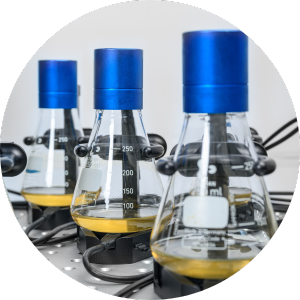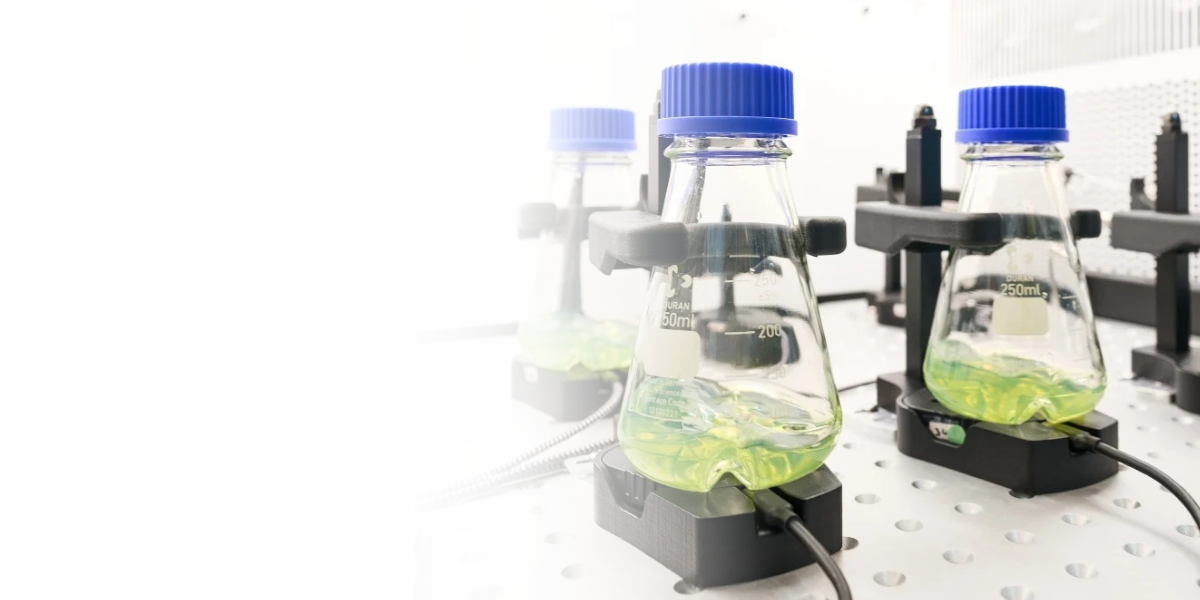
Do you work want to monitor dissolved oxygen in your baffled shake flasks? Learn More

Baffled vs. Non-baffled Shake Flasks

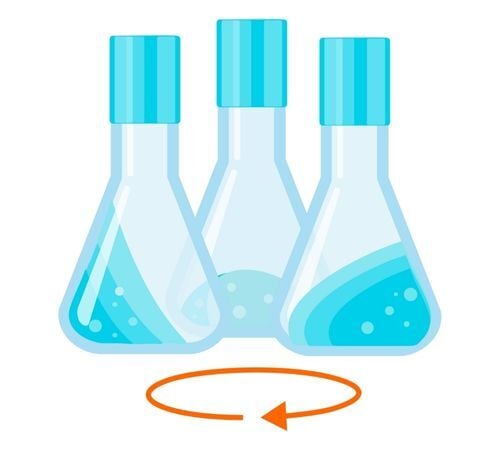
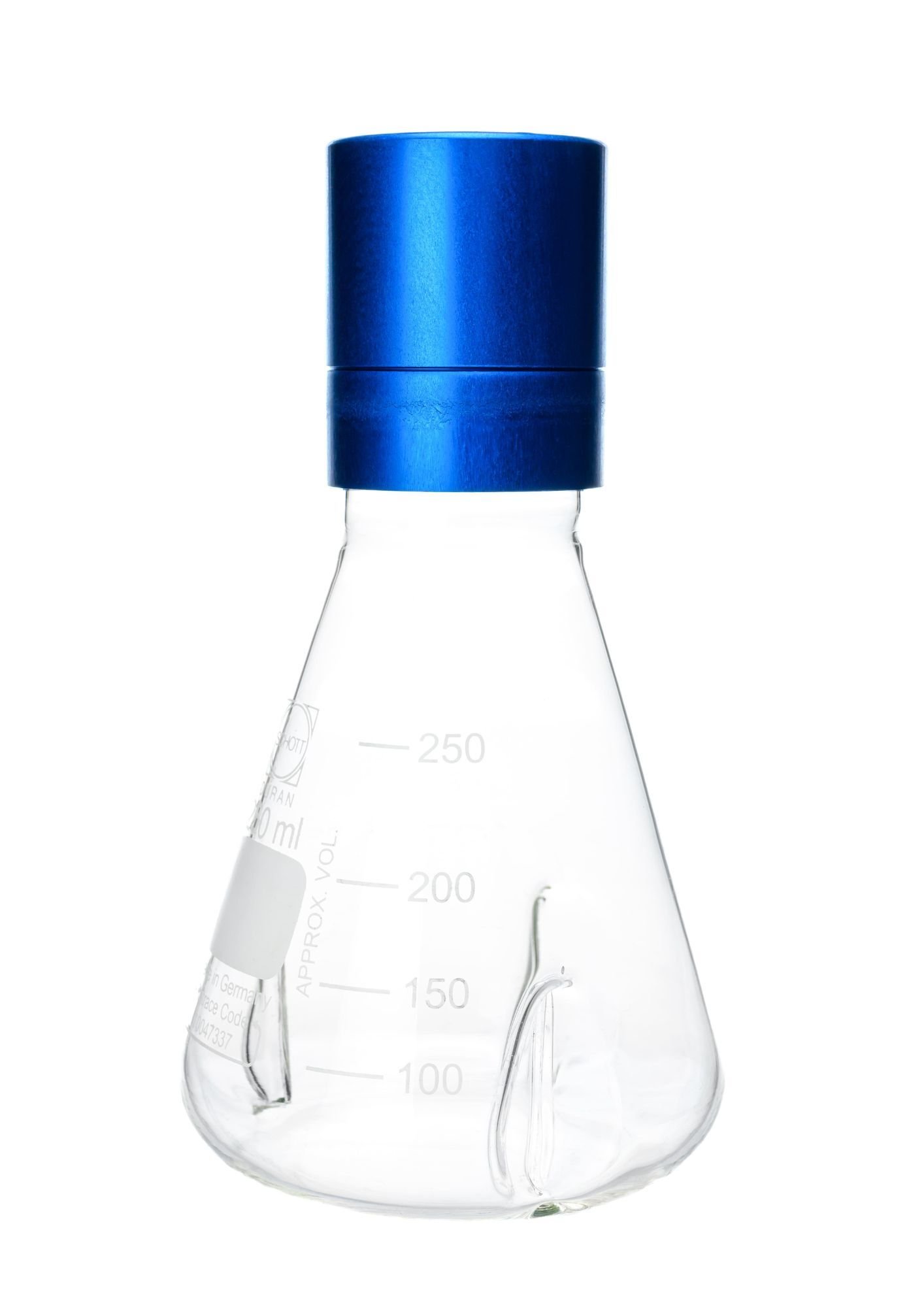
Baffled Flask

baffled flask- upright format

Baffled shake flasks feature small indentations, or baffles, along their inner walls, designed to boost oxygen transfer within the culture. By creating turbulence as the liquid is shaken, these flasks help ensure microbes get plenty of oxygen for faster growth and higher productivity. The placement of baffles increases the liquid’s surface area in contact with air, making oxygen uptake more efficient. They also improve mixing, helping to reduce areas with low oxygen and preventing uneven distributions. Baffled flasks are especially useful for fast-growing organisms with a high demand for oxygen. 

  • Baffles (shallow inward curves) enhance turbulence, thereby increasing the liquid surface area

  • They can improve oxygen transfer to the medium

  • Especially useful for fast-growing organisms with a high demand for oxygen

Non-baffled Flask

non-baffled shake flask

Non-baffled flasks don’t have the internal indentations that create turbulence, giving them a simpler design. This simplicity can make experiments easier to control and can sometimes improve consistency across runs. Without baffles, the liquid experiences less turbulence, which helps reduce foam formation, spilling, and lowers mechanical stress on the culture. This makes non-baffled flasks a good choice for delicate or shear-sensitive cells that might be harmed by more vigorous mixing.

Check out our blog post to learn more!

  • Non-baffled shake flasks have a smooth interior and simpler design

  • Less turbulence → usually lower oxygen transfer, but more controlled bioprocess conditions

  • Best choice for slow-growing and/or shear-stress sensitive organisms

Why Baffles? - The Oxygen Dilemma

In shake flasks, oxygen transfer is often limited compared to controlled bioreactors due to smaller liquid surface areas and slower mixing. In bioreactors, controlled gassing helps maintain consistent oxygen levels, a technique that is not practical in shake flasks. Oxygen limitation can reduce microbial growth, alter metabolism, and lower product yields. While signs such as slow growth, unusual metabolite accumulation, or foam formation may be visible, oxygen limitation often goes unnoticed yet still has detrimental effects. For instance, E. coli produces more acetate via its secondary metabolism under oxygen limitation which not only reduces the final product yield but also lowers the pH favouring non-ideal conditions. Several strategies can improve oxygen availability in shake flasks but they may be incompatible with the bioprocess or already exhausted. Baffles, when used correctly and under the right conditions, reliably enhance oxygen transfer to the medium, supporting more efficient culture growth while maintaining a simple, scalable setup.
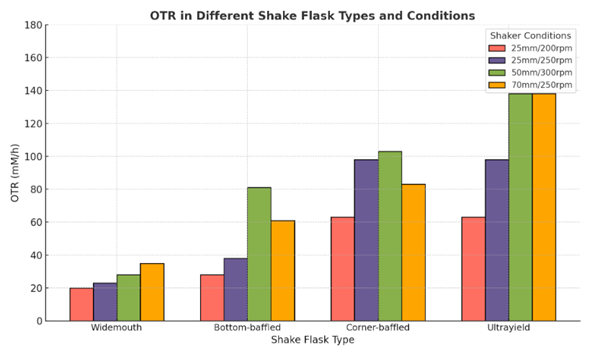
 

OTR in diff flasks and conditionsDifferent shake flask designs provide varying levels of oxygen transfer rates (OTRs). Baffled flasks consistently enhance OTRs compared to classical unbaffled (widemouth) flasks. Among baffled designs, differences exist too, e.g. corner-baffled flasks vs. flasks with bottom baffles. These designs also influence the OTR of the culture. 

Figure adapted from: Running, J.A. and Bansal, K., 2016. Oxygen transfer rates in shaken culture vessels from Fernbach flasks to microtiter plates. Biotechnology and Bioengineering 113: 1729–173.


Want to Learn More About Baffled Flasks?

Check out this Episode of sbi Lab Chats!
Baffled by Baffles - Lab Chats - Scientific Bioprocessing - Web Thumbnail - S2E1

Watch Now

Baffled Flask Challenges

Baffled shake flasks can offer advantages when it comes to oxygen supply. However, there are certain challenges that appear when using baffled shake flasks. 

  • Out of Phase Shaking
  • Foaming
  • Spilling
  • Reproducibility
inphase-shaking-shake-flask-icon-1

Baffles Make Waves

In a normal shake flask, the liquid generally moves smoothly in phase with the shaker, minimizing splashing, foaming, and shear stress. In baffled flasks, however, the liquid can move out of phase with the shaker motion due to the baffles disrupting the flow. This irregular movement can increase the risk of spilling, generate foam, and expose cells to higher shear stress, all of which can affect culture performance and reproducibility.

Read more: Büchs, J., et al., 2000: Out-of-phase operating conditions, a hitherto unknown phenomenon in shaking bioreactors


foaming-icon-1

Bubbles mean trouble

Foaming in shake flasks is generally undesirable, and it occurs more readily in baffled flasks due to the increased turbulence they create. Foam can block oxygen transfer and reduce the efficiency of mixing. Once formed, it is difficult to eliminate and can isolate the culture from the headspace, compromising mixing and reducing the accuracy and reproducibility of results. Persistent foaming can negatively affect culture growth and experimental outcomes, though adding antifoam agents can help control excessive foam and improve overall performance.

Read more: Vonester, D., et al. 2025, Foam Formation in Shake Flasks and Its Consequences


shake-flask-spilling

Shake, Don’t Spill

Adequate headspace in shake flasks is crucial to prevent spilling during vigorous shaking. Baffled flasks create more turbulence than smooth-walled flasks, which improves mixing but also increases the risk of liquid splashing out. Having enough headspace can prevent overflowing, protecting both the sample and the incubator. Furthermore, splashing of liquid to the headspace and onto the flask closing can cause further problems, e.g., if the flask is closed with a cotton plug or membrane - these can get wet and clogged which would hinder gas exchange and severely decrease oyxgen transfer. It's particularly important to keep this in mind for high-volume or foamy cultures, where baffled flasks can otherwise become messy. Proper headspace ensures safe, efficient shaking while still taking advantage of the oxygen-transfer benefits of baffles.

reproducibility-shake-flasks-icon-1

Consistency? Not Always

Working with shake flasks can be challenging because no two flasks behave exactly the same. Variations in baffle shape or placement, combined with out-of-phase shaking, make results less consistent, especially in manually manufactured baffled flasks. These factors make it harder to accurately calculate the mass transfer coefficient (kₗa) and to predict culture performance. As a result, reproducibility between experiments can be low, and scaling up processes from flasks to bioreactors becomes more difficult. Careful standardization and awareness of these limitations are essential when relying on shake flasks for experimental data.

Out of Phase Shaking
inphase-shaking-shake-flask-icon-1

Baffles Make Waves

In a normal shake flask, the liquid generally moves smoothly in phase with the shaker, minimizing splashing, foaming, and shear stress. In baffled flasks, however, the liquid can move out of phase with the shaker motion due to the baffles disrupting the flow. This irregular movement can increase the risk of spilling, generate foam, and expose cells to higher shear stress, all of which can affect culture performance and reproducibility.

Read more: Büchs, J., et al., 2000: Out-of-phase operating conditions, a hitherto unknown phenomenon in shaking bioreactors


Foaming
foaming-icon-1

Bubbles mean trouble

Foaming in shake flasks is generally undesirable, and it occurs more readily in baffled flasks due to the increased turbulence they create. Foam can block oxygen transfer and reduce the efficiency of mixing. Once formed, it is difficult to eliminate and can isolate the culture from the headspace, compromising mixing and reducing the accuracy and reproducibility of results. Persistent foaming can negatively affect culture growth and experimental outcomes, though adding antifoam agents can help control excessive foam and improve overall performance.

Read more: Vonester, D., et al. 2025, Foam Formation in Shake Flasks and Its Consequences


Spilling
shake-flask-spilling

Shake, Don’t Spill

Adequate headspace in shake flasks is crucial to prevent spilling during vigorous shaking. Baffled flasks create more turbulence than smooth-walled flasks, which improves mixing but also increases the risk of liquid splashing out. Having enough headspace can prevent overflowing, protecting both the sample and the incubator. Furthermore, splashing of liquid to the headspace and onto the flask closing can cause further problems, e.g., if the flask is closed with a cotton plug or membrane - these can get wet and clogged which would hinder gas exchange and severely decrease oyxgen transfer. It's particularly important to keep this in mind for high-volume or foamy cultures, where baffled flasks can otherwise become messy. Proper headspace ensures safe, efficient shaking while still taking advantage of the oxygen-transfer benefits of baffles.

Reproducibility
reproducibility-shake-flasks-icon-1

Consistency? Not Always

Working with shake flasks can be challenging because no two flasks behave exactly the same. Variations in baffle shape or placement, combined with out-of-phase shaking, make results less consistent, especially in manually manufactured baffled flasks. These factors make it harder to accurately calculate the mass transfer coefficient (kₗa) and to predict culture performance. As a result, reproducibility between experiments can be low, and scaling up processes from flasks to bioreactors becomes more difficult. Careful standardization and awareness of these limitations are essential when relying on shake flasks for experimental data.


Not All Baffled Flasks Are Created Equal

Differences in Manufacturing

Did you know that not all baffled flasks are identical? Most laboratory-grade glass versions are hand- or semi-automatically blown, so baffle size, shape, and placement can vary slightly from flask to flask. These small differences change how the liquid moves, how much turbulence is generated, and how prone the culture is to foaming, affecting oxygen transfer and reproducibility. Molded plastic flasks are more uniform, but glass-blown flasks are still preferred for their clarity, chemical resistance, and design flexibility.

Baffled Flask Types

There is a broad variety of baffled flasks, differing in e.g., type and number of baffles.


bottom baffles
Bottom Baffles
side baffles
Side or Wall Baffles
corning
Corning Baffled Flasks
thomson ultra
Thomson Ultra Yield Flask (UYF)
duran
Commercial Grade (e.g., Duran)
hand-made baffles
Hand-made (e.g., glass-blower)

The Oxygen Myth: Baffles Aren’t a Magic Fix

Baffled flasks are often assumed to solve oxygen limitation because they increase the surface area of the liquid and improve mixing. However, they do not automatically provide enough oxygen for all cultures. In sbi-conducted studies with baffled flask users, all participants believed their cultures had a sufficient supply of oxygen—but 9 out of 10 were actually oxygen-limited! Oxygen availability still depends on a multitude of factors and for really fast-growing cultures might be difficult to come by. Baffles help, but they are not a guarantee, and understanding their limits is essential for reliable growth and reproducible results.


E coli Cultivation with DO Nanoparticles

Although both cultures were grown in baffled shake flasks, the culture with a 30% fill volume (orange) exhibited a marked oxygen limitation after approximately eight hours. This was unexpected, as the baffled design was assumed to ensure adequate oxygen transfer at higher fill volumes. However, as the data show, the added fill volume still resulted in insufficient oxygen availability.

shake flask upright format
Baffle Alternatives

Other Measures to Improve Oxygen Availability in Shake Flasks:

   - Reduce Fill Volume (or use larger flask while keeping the absolute fill volume)

   - Increase Shaking Speed

   - Increase Shaker Throw/ Diameter

   - Check Seal Type (Use cotton plugs instead of aluminium foil)


Want To Know If Your Bioprocess Is Oxygen-Limited?

Contact Us
shake flask DO Nano upright format

sbi's Solution for Baffled Flasks:

DO Nanoparticles

  • Accurate DO Monitoring

  • Universal Compatibility (works with commercial and hand-made baffled flasks)
  • Better Data, Better Decisions 
  • Easy Set-up and Handling


Check Out these DO Nanoparticles' Data Sets

Different flask types, organisms, and culture conditions?
DO Nanoparticles give reliable readings in most setups!


e.coli expressing eGFP DO nano data
250 ml DURAN® Baffled Flask (4 bottom baffles), 20% filling volume (50 ml LB medium), 0.05 % NPs, silicon antifoam, 250 rpm, 25 mm, 37°C.
e.coli in UYF DO nano data
250 ml Thomson's Ultra Yield® Flask (UYF), 20% filling volume, 0.05 % NPs, silicon antifoam, 200 rpm, 25 mm, 37°C.
pastoris_cultivation_nanoparticles
Pichia pastoris cultivation in baffled or flat flask (10 or 20% filling volume).
"It has been clearly demonstrated how quickly E. coli cultures became oxygen limited when unbaffled flasks are substituted for baffled flasks.”

-Biotechnology and Bioengineering (2016): Oxygen transfer rates in shaken culture vessels (Bioengineering and Bioprocessing R&D, Dow AgroSciences, Indianapolis, IN, USA)
“The DO Nanoparticles enabled us to optimize our process parameters with regard to oxygen availability in our chosen baffled shake flasks. Having live information on this critical, previously inaccessible process variable for our standard protocols proved extremely helpful in evaluating process performance and adjusting parameters accordingly."

-Dr.-Ing. Sarah Westarp (Technical University Berlin, Berlin)

The DOTS Platform 

Whether you use baffled or non-baffled shake flasks, DOTS sensors and actuators provide data access and process control, allowing shake flasks to compete with advanced bioreactor systems while remaining low-cost, parallelizable, and easy to use.

Explore the DOTS Platform!

MPS
Multiparameter
Sensors

As the central piece of our DOTS Platform, the MPS enables effortless online monitoring of multiple parameters in shake flasks. Do you need to monitor biomass? Fluorescence? Dissolved Oxygen? Maybe you want it all at once? Do you want to add environmental parameters, like temperature and shaking speed? All this and more is now possible.
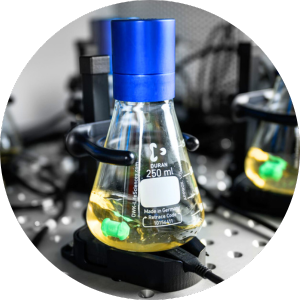
SensorPills
Dissolved Oxygen Sensors

The easiest way to measure dissolved oxygen (DO) in shake flasks! By just adding the factory-calibrated and pre-sterilized sensor to the medium and mounting the flask on top of the Multiparameter Sensor, DO can be measured effortlessly, providing high-density and real-time data. When combined with the Liquid Injection System (LIS), DO-based feeding can be realized! Available in different form factors, including pills and nanoparticles.
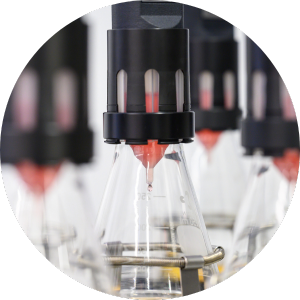
LIS
Liquid Injection System

As an integral part of the DOTS Platform, the Liquid Injection System (LIS) serves as a valuable tool for automated feeding in shake flasks. It opens the door to bioreactor-like bioprocesses within shake flasks, making fed-batch, biomass- or DO-based feeding, or automated promotor induction all attainable through its advanced capabilities.